Tuesday, January 20, 2015

292 - Datawind to launch Android phones under Rs.3,000 bracket. - India Today


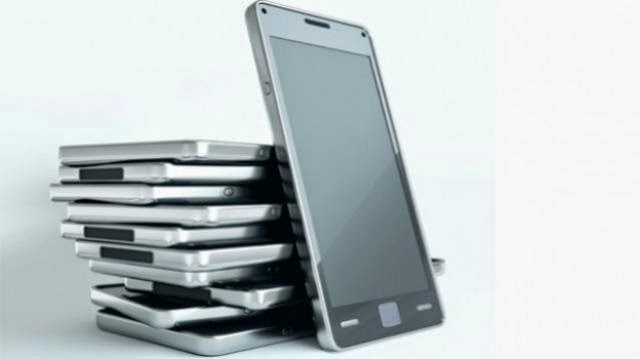
Datawind, the brand behind the popular Aakash Tablet initiative, will soon launch its own range of  smart phones costing  below the price bracket of Rs.3,000.

The range will consist of a 3G smartphone which will be slightly expensive than the 2G variant in the same line up.

The 3G smartphone will come with a 4- inch touchscreen and will be powered by a 1.2GHz processor. the make of the chipset has not been confirmed yet. The smartphone is most likely to come with Android KitKat out of the box.

The cheaper variant is most likely to just come with 2G speeds. With 3G network still limited in India the cheaper variant will prove to be a better deal for people looking for ultra cheap smartphones. Datawind will be offering features like free internet for a year to its users to penetrate deep in the market. Thsi feature is possible due to Datawind's exceptional ability to compress data.

The CEO of Datawind Suneet Singh Tuli is targeting the lowest possible price bracket for its devices as according to him providing a cheap alternative to feature phones will revolutionize the reach of smartphones in India.

Tuli further explained that 65 percent of the phones sold in India are under the price bracket of Rs.4,000 and to make an impact on the entry level market the free internet, Android powered phone has to be priced below that amount.

Thursday, January 15, 2015

291 - Data Wind CEO Suneet Singh Tuli receives B harat Samman Award and GPS Award

Data Wind CEO Suneet Singh Tuli receives B harat Samman Award and GPS Award

Please Click on Title to Read Article

http://techone3.in/datawind-ceo-suneet-singh-tuli-receives-bharat-samman-award-gps-award-4206/

290 - Incentivise low-cost technology to help achieve ‘Make in India’ - Asian Age


Jan 15, 2015 | Age Correspondent | Mumbai

The government can incentivise Indian scientific institutions to focus on affordable excellence in the context of the Prime Minister’s various sche-mes like ‘Make in India’ , said Dr R. Mashelkar, National Research Professor, CSIR-National Che-mical Laboratory.

Going forward also, “it is important that the government launches a Digital Inclusive Innovation initiative so that digital India become truly inclusive”, he added.

Speaking to this newspaper from Pune, Dr Mashelkar said, “When he was director general of CSIR, they had instituted the New Millennium Ind-ian Technology Leaders-hip Initiative (NMITLI), which was a public private partnership directed exc-lusively towards affordable excellence that beca-me a game-changer”.

“We need to launch national grand challenges for vaccines to therapeutics to tablets. We did make the $35 Akash tablet, after all,” he added.

Dr Mashelkar who heads the Prime Minister’s Swaach Bharat Technical Expert Committee, said the government can create special drivers for digital inclusive innovation by targeted funding for digital inclusion based R&D (like NMITLI).

It can also suitably design incentivisation (including fiscal) for all stakeholders participating in digital inclusion; give government procurement and price preference on products meeting the inclusive innovation’ mandate like the low cost Aakash tablet; and have a conducive policy frameworks to promote ‘digital inclusive innovation’.

Dr Mashelkar said Indian scientists can harness truly sophisticated science or technology to achieve high quality goods and services that are affordable to many, and not just a privileged few.

Digital India, he said will impact everything as there will be universal mobile access to online government services and basic delivery services.

Tuesday, December 30, 2014

289 - Modi Wants His Ministers To Buy Desi Electronics, But What Make In India Tech Is Worth Buying?

Modi Wants His Ministers To Buy Desi Electronics, But What Make In India Tech Is Worth Buying?

December 30, 2014


Modi Wants His Ministers To Use Desi Electronics. But What Do We Buy?


The government has asked ministries to prefer domestically manufactured electronic products, because they think it will boost electronics production. That is what Prime Minister Narendra Modi's "Make in India" is working for. They've already gone ahead and planned to identify department-specific electronic products to procure them. Now is this is a pretty interesting situation – what products are we talking about?
Smartphones


Can you name a domestically manufactured smartphone? Apart from Micromax, that is (because seriously, imagine Modi rocking a Micromax). Karbonn, most other other players you can think of also aren't Indian as the phones are sourced from China.

Tablets
aakash.org.in

Years ago, the government had planned to give its ministers iPads and Samsung Tabs to phase out the massive amount of sarkari paperwork. We did release the Aakash tablet that was briefly a “pride and joy” kind of product – until we found how awful it was. And on a closer look, the Aakash tablet’s Make in India tag falls apart when you find that less than 20% of it is Indian hardware. 

OK then. Chargers? Power banks? 

mikehedges
Sure. You’ll use your easy access to ALL THAT government money to buy desi tech like chargers and power banks. Like that’s going to happen.

At least an Indian printer?


This is the kind of rage Americans feel for their printers. You think Indian printers will make it better?

Friday, December 26, 2014

288 - Govt to review Aakash-IV tablet specs - Indian Express

FRIDAY, DEC 26, 2014


The Aakash-IV tablet project was started by former Telecom and HRD Minister Kapil Sibal in the UPA government. - 

By: PTI | New Delhi | Posted: December 23, 2014 5:10 pm
Government is considering a review of technical specifications of Aakash 1V tablet, the previous UPA government’s trumpeted low-cost computing device project.

The first and second versions of the Aakash were shipped by vendor Datawind for Rs 2,276 and Rs 2,263 per unit.
The Department of Electronics and IT (DEITY), which was working on a 4G version of Aakash tablet at price point of around Rs 3,999, has informed a Parliamentary committee that vendors were unable to meet specifications desired under the tender like disc writing, Java efficiency and 3G modems.

The Aakash-IV tablet project was started by former Telecom and HRD Minister Kapil Sibal in the UPA government with the objective of spreading education digitally.

“HRD ministry started this project. The initial mistake that was committed by us was that we fixed the price and asked the manufacturers to supply the product on this fixed price.
“If we could have decided the specifications and then asked the manufacturers to supply the product the that could be the better arrangement,” DEITY Secretary has told the Standing Committee on Information Technology.

It is now proposed to to review technical specifications of Aakash-IV tablet and the matter is under consideration of the government, the DEITY Secretary said.
After approval of the competent authority, the tender process for making available Aakash-IV tablet will be taken up with DGS&D immediately, he added.

The committee, chaired by MP Anurag Singh Thakur, has asked DEITY to keep it informed on the progress made with respect to Aakash-IV tablet.
Aakash tablet project had faced several issues and its launch was delayed.
It may be noted that Prime Minister Narendra Modi in 2012 as Gujarat Chief Minister had criticised Sibal on the Aakash project.

- See more at: http://indianexpress.com/article/technology/mobile-tabs/govt-to-review-aakash-iv-tablet-specs/#sthash.OoQ4jhvD.dpuf

287 - Government may review technical specifications of Aakash 4 tablet - IBN Live


New Delhi: Government is considering a review of technical specifications of Aakash 4 tablet, the previous UPA government's trumpeted low-cost computing device project.

The first and second versions of the Aakash were shipped by vendor Datawind for Rs 2,276 and Rs 2,263 per unit.

The Department of Electronics and IT (DEITY), which was working on a 4G version of Aakash tablet at price point of around Rs 3,999, has informed a Parliamentary committee that vendors were unable to meet specifications desired under the tender like disc writing, Java efficiency and 3G modems.


The Aakash 4 tablet project was started by former Telecom and HRD Minister Kapil Sibal in the UPA government with the objective of spreading education digitally.


The Aakash 4 tablet project was started by former Telecom and HRD Minister Kapil Sibal in the UPA government with the objective of spreading education digitally.
"HRD ministry started this project. The initial mistake that was committed by us was that we fixed the price and asked the manufacturers to supply the product on this fixed price.
"If we could have decided the specifications and then asked the manufacturers to supply the product the that could be the better arrangement," DEITY Secretary has told the Standing Committee on Information Technology.
It is now proposed to review technical specifications of Aakash 4 tablet and the matter is under consideration of the government, the DEITY Secretary said.
After approval of the competent authority, the tender process for making available Aakash-IV tablet will be taken up with DGS&D immediately, he added.
The committee, chaired by MP Anurag Singh Thakur, has asked DEITY to keep it informed on the progress made with respect to Aakash-IV tablet.
Aakash tablet project had faced several issues and its launch was delayed.

It may be noted that Prime Minister Narendra Modi in 2012 as Gujarat Chief Minister had criticised Sibal on the Aakash project.

286 - Narendra Modi criticism may hit Aakash tablet; govt puts device under review


By: PTI | New Delhi | December 22, 2014 10:05 pm

SUMMARY
Prime Minister Narendra Modi in 2012 as Gujarat Chief Minister had criticised Kapil Sibal on the Aakash project.

Government is considering a review of technical specifications of Aakash 1V tablet, the previous UPA government’s trumpeted low-cost computing device project.

It may be noted that Prime Minister Narendra Modi in 2012 as Gujarat Chief Minister had criticised Kapil Sibal on the Aakash project.

The first and second versions of the Aakash were shipped by vendor Datawind for Rs 2,276 and Rs 2,263 per unit.

The Department of Electronics and IT (DEITY), which was working on a 4G version of Aakash tablet at price point of around Rs 3,999, has informed a Parliamentary committee that vendors were unable to meet specifications desired under the tender like disc writing, Java efficiency and 3G modems

The Aakash-IV tablet project was started by former Telecom and HRD Minister Kapil Sibal in the UPA government with the objective of spreading education digitally.

“HRD ministry started this project. The initial mistake that was committed by us was that we fixed the price and asked the manufacturers to supply the product on this fixed price.

“If we could have decided the specifications and then asked the manufacturers to supply the product the that could be the better arrangement,” DEITY Secretary has told the Standing Committee on Information Technology.

It is now proposed to to review technical specifications of Aakash-IV tablet and the matter is under consideration of the government, the DEITY Secretary said.

After approval of the competent authority, the tender process for making available Aakash-IV tablet will be taken up with DGS&D immediately, he added.

The committee, chaired by MP Anurag Singh Thakur, has asked DEITY to keep it informed on the progress made with respect to Aakash-IV tablet.

Aakash tablet project had faced several issues and its launch was delayed.

285 - Government may review Aakash tablet specifications - Economic Times


NEW DELHI: Government is considering a review of technical specifications of Aakash 1V tablet, the previous UPA government's trumpeted low-cost computing device project.

The first and second versions of the Aakash were shipped by vendor Datawind for Rs 2,276 and Rs 2,263 per unit.

The Department of Electronics and IT (DEITY), which was working on a 4G version of Aakash tablet at price point of around Rs 3,999, has informed a Parliamentary committee that vendors were unable to meet specifications desired under the tender like disc writing, Java efficiency and 3G modems

The Aakash-IV tablet project was started by former Telecom and HRD Minister Kapil Sibal in the UPA government with the objective of spreading education digitally.

"HRD ministry started this project. The initial mistake that was committed by us was that we fixed the price and asked the manufacturers to supply the product on this fixed price.

"If we could have decided the specifications and then asked the manufacturers to supply the product then that could be the better arrangement," DEITY Secretary has told the Standing Committee on Information Technology.

It is now proposed to to review technical specifications of Aakash-IV tablet and the matter is under consideration of the government, the DEITY Secretary said.

After approval of the competent authority, the tender process for making available Aakash-IV tablet will be taken up with DGS&D immediately, he added.

The committee, chaired by MP Anurag Singh Thakur, has asked DEITY to keep it informed on the progress made with respect to Aakash-IV tablet.

Aakash tablet project had faced several issues and its launch was delayed.


It may be noted that Prime Minister Narendra Modi in 2012 as Gujarat Chief Minister had criticised Sibal on the Aakash project.

Saturday, November 29, 2014

284 - The ‘Make in India’ dream: India needs to find it’s own Xiaomi - First Post


By Naina Khedekar /  26 Nov 2014 , 08:29


When PM Narendra Modi announced the ‘Make in India’ initiative in September, the first thing that struck us was – How about a phone that is ‘completely’ built in India? Not the old assembled units that are sold by Micromax and the like. But a phone that is built from ground-up in India.
After all, in the last couple of years, the Indian mobile sector has evolved by leaps and bounds.With the increasing purchase power of the middle class and growing number of phone users, it has in fact, become a mining hub for phone ‘vendors’.
IDC official numbers show that from 66 million units shipped in the fiscal year 2006, a whopping 221.6 million units were imported to India in 2012. In 2013, we crossed the 1 billion mark for smartphones and in the first quarter of 2014, India was one of the fastest growing smartphone markets in Asia Pacific. So why not a made in India mobile phone?
We’ve seen efforts to this end in the past with ‘Project Aakash’ that aimed at an India-built tablet for students. However, Aakash was only assembled in India and couldn’t be called a true ‘Made in India‘tablet.
Xiaomi has already taken the first steps in this direction, and talked about their plans of moving their manufacturing base to India.
So although hazy, the dream may become real in the distant future. We spoke to a few Industry experts, mostly phone makers, and asked them what they think of building a phone in India and the possible hurdles.
‘Make in India’ initiative
“With the new Govt taking steps in the direction of ‘all clearances under one roof’ and fast track approvals, we are confident that the dream of ‘Make in India’ will actualize, points out Datawind’s CEO Suneet Singh Tuli.
A firm believer and proponent of ‘Made in India’ products, Datawind are among the only companies in the tablet PC segment, that has set up a Fabrication plant and manufacturing facility for touch panels in India.
The Make in India initiative has been greeted with considerable enthusiasm across sectors.
Government regulations, uncertain political conditions and duty structure seem to have been the key challenges, and these creases could be ironed out with the new initiative.
However, will this be enough to help companies begin building a device here? No, not really. While the thought is noble, it requires a lot more of effort to actually get started. Government regulations, import duty, and manufacturing ecosystems are all problem areas that need to be revamped urgently.

Image: Getty Images

Setting up manufacturing units
Building a phone/tablet that can effectively compete with other devices in the market, is not a simple process.  Various components like the camera, chipset, memory modules etc are usually sourced from different companies. In order to manufacture a phone in India, you will need the entire ecosystem to be present here. And, that is the biggest hurdle right now.
However it should not be that difficult considering how we’ve flourished in the automotive business. Today, India (read Chennai) has all the integral elements, technologies, component suppliers, plants etc that have been contributing to the state’s development, and Gujarat may soon follow suit.
So, what is holding us back from building an ecosystem or rather why haven’t we done so yet?
“When it comes to manufacturing, India faces a few challenges such as the country’s chronic infrastructure and logistics shortage with unproductive transport networks making it hard-hitting for manufacturing companies to achieve just-in-time production,” says Pankaj Rana, Business Head, Smart Phones and Tablets, Panasonic India.
Prashant Bindal, CEO, Spice Mobility, feels India is already the fastest growing mobile market in the world and the industry will benefit significantly from a local manufacturing policy.
“At the moment, there are several factors holding back local manufacturing of mobile phones in the country such as unavailability of local components and assembly and an organized ecosystem for chipset manufacturing, lack of skilled manpower and infrastructure hurdles in the country. The high taxation structures and interest rates for corporate lending discourage the entry of domestic manufacturers in these segments,” he said.
Tom Lu, CEO, OPPO Mobiles India, said “India has immense talent and the growth of the manufacturing sector here is commendable. We are not averse to the idea of manufacturing phones here. However, we are still relatively new in the market and depending upon our growth here, we will look at setting up a manufacturing plant here in India.”
However, companies like Xiaomi are already making plans to begin manufacturing here. Manu Jain, India head, Xiaomi tells us that, “We had plans to begin manufacturing in India even before we did the whole cost effective analysis. And, if we have to stay close to Indian audiences and build India specific products, then we probably do it here. It was more from the perspective of building products for India rather other benefits.” Xiaomi is also working on setting up their already existing e-commerce site for India. The site should go live in the next four to six months, he adds.
What has been stopping us?
Now, to begin manufacturing goods locally, the requisites go well beyond simply building a manufacturing unit. It requires a lot more like quality vendors for mechanical and electrical components, software companies, skilled labour, good supply of electricity and water, reliable supply chain and the list is endless. Manufacturing itself has several roadblocks.
Tuli says that components for phablets currently attract a 28.82% duty/levy on import as against 12% on the finished products. So, in such a scenario, why would any player manufacture them? There is just no incentive.
“Then again, for products belonging to same category i.e. Smartphones, phablets and tablets, the duty structure is different. Smartphones/phablets currently draw a concessional rate of 6% import duty on the finished product as against 12% for tablets. These are devices ranging in screen sizes of 5 inches to 6.9 inches that provide full functionalities of tablets. Should these be dubbed phone or tablet? There are a host of sub 7 inches phablets that are masquerading as smartphones, simply with a single purpose of taking advantage of lower duty on smartphones. The current specs of these phablets aka smartphones make them comparable to low end laptops or can be classified as automatic data processing machines,” he adds.


Phones from local brands

“We have just begun to do the math internally of cost benefit analysis. Now, you will face custom duties and have to pay part of logistics cost for shipping goods from Taiwan to India, and this cost is not very high. On the other hand, you will face the entire manufacturing and assembling cost among others, and running manufacturing operations here will become economic only after a certain volume of devices is achieved,” adds Jain.
“In the current situation companies cannot achieve Economies of Scale until India becomes an export hub, as the quantities will be less and manufacturing cost will thus be higher ultimately leading to higher cost of product to the consumer, points out Rana.
On a brighter note, he also adds, “As the costs for Chinese products are going up, this is a great time for companies to move production to India. Prices are sure to come down as import related logistical cost and duties will no longer be a part of the cost of the product. However, it will still take some time for manufacturing costs to come down as companies will be able to achieve.”
Then, how is it possible in China and Taiwan?
Yes, this is something that has been on our mind for the longest time. The Indian market is similar to the Chinese market. However, the latter is a manufacturing hub for the world at large, and we are still at the nascent stage.
It takes many years to establish an ecosystem conducive to building devices, especially phones and tablets. “If you see in the last 10-15 years, companies in India focus on exploring services – IT services and other services. China and Taiwan on the other hand, developed the entire ecosystem for manufacturing, Jain said.
“When compared to China, the country has followed a more-exports-at-any-cost policy to enhance its economy. The Chinese government’s support to manufacturing in the form of reasonable cost of funds, affordable inputs and world-class infrastructure gives the country an advantage over Indian manufacturers,” adds Rana.
In China and Taiwan, the whole process of sourcing and manufacturing to logistics and supply chain is well defined and regulated. “This is true for not just electronics but this discipline cuts across all segments and that is essentially the reason why these countries form the sourcing base globally,” points out Tuli.
Spice’s Bindal makes a similar point. “The presence of trained manpower and financial support from the local governments goes a long way in making these countries competitive in manufacturing mobile handsets. There are several local manufacturers that have developed world class manufacturing facilities in these countries and are supplying products to companies globally. As mentioned above, we lag behind on all these factors.”


How the Indian government can help?
While the government has already started taking some efforts in this direction, it could help further by offering incentives to companies looking to manufacture here.
Pointing out some of the steps taken by the government, Rana states “It (government) has given in-principle approval to five National Investment and Manufacturing Zones (NIMZs) outside the Delhi-Mumbai Industrial Corridor (DMIC) region. Also, the central government is giving 25% subsidy and various state governments are offering VAT-free operations, amongst other relaxations. This is leading to a lot of investment opportunities for global companies to manufacture in India.”
However, that isn’t enough and the government could take some cues from developed as well as other developing countries and implement some relaxations.
“If you look at developed economies, there is marginal to no import duty on these electronic items as they are seen as essential commodities. Countries in the west have actually rolled out programs where they are encouraging manufacturing by creating these tax led enabling environments. US for one is offering tax preferences (deductions) to encourage domestic production activities. The government is actually looking at these tax breaks as federal tax spends; besides it is creating special provisions to support this manufacturing and also becoming one of the large buyers,” said Tuli.
“The government should actually look at removal or minimizing of the current duties/taxes on tablets, PCs, laptops, smartphones/phablets or at least at the bare minimum ensure uniformity in taxes. We believe that the current tax rate should be reduced to at max 2% of the import value as against the current 12%,” he adds.


Wednesday, November 26, 2014

283 - Datawind to launch 2K smartphone soon

Related Keywords: Datawind|Akash-Tablets
Datawind to launch 2K smartphone soon
TNN | Nov 23, 2014, 12.43AM IST

HYDERABAD: Canadian low-cost tablet and mobile devices maker Datawind, which shot to fame with its Akash tablets, will launch its new smartphone at a mindboggling Rs 2,000 in a few weeks. Datawind will also set up its second Indian manufacturing unit in central India, said a top official of the company here on Saturday. 

"We had gone for an initial public offer (IPO) on Toronto Stock Exchange in July this year. A majority of the proceeds (of the Canadian Dollars 30 million) will be used towards investing in expansion activities in India. We are expected to announce the location of our second manufacturing unit in the country in January 2015. All I can reveal is that it will be in central India," Datawind chief executive officer Suneet Singh Tuli said on the sidelines of the Young India (Yi) Youth Conclave organized by the Confederation of Indian Industry (CII) here. 

In India, the company has a manufacturing unit at Amritsar, where it makes touch-screen panels with a capacity of 50,000-60,000 units per month. Apart from Amritsar, the company has a unit in Montreal, Canada, with a similar capacity. 

The company, which clocked revenues of £14 million for the financial year that ended March 31, 2014, is now eyeing doubling its revenues this fiscal, said Tuli, adding that currently 70% of its turnover comes from India. 

Meanwhile, speaking about the unveiling of its new smartphone at Rs 2,000 that will come bundled with one year free internet access, he said that the phone is expected to be launched in the next few weeks.